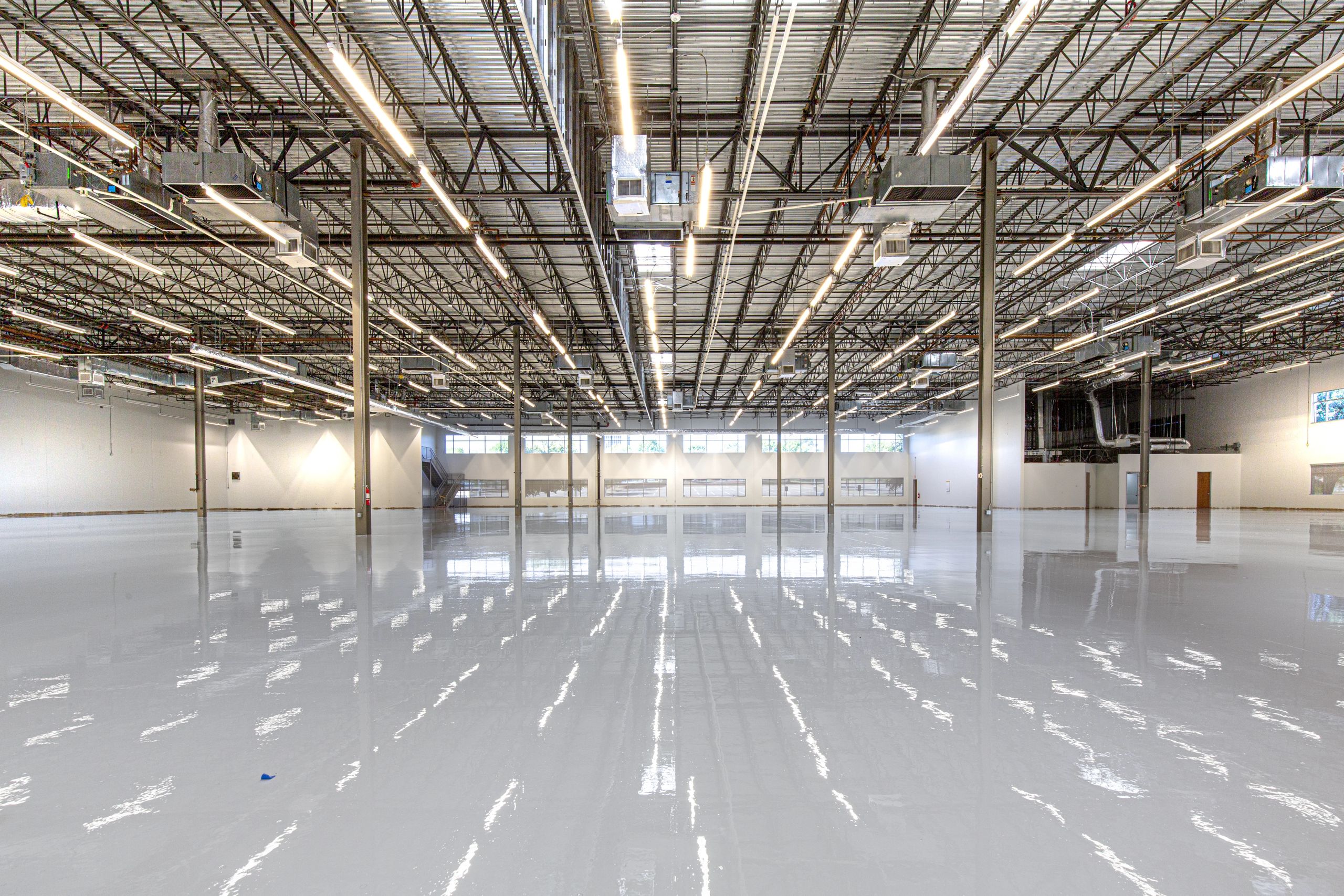
Epoxy Flooring in Miami
Epoxy flooring is a hard, seamless coating made by mixing resin and hardener and applying it over prepared concrete. It seals the slab, resists stains and chemicals, and gives garages, rooms, and workspaces a clean, finished surface that is easy to keep clean.
What Epoxy Flooring Is and How It Works
A typical system starts with primer, followed by a base coat and a topcoat. Flake or quartz can be broadcast into the base coat for texture and color, and a clear topcoat protects the finish. The coating bonds to the concrete rather than sitting on it like paint, which is why surface preparation matters so much.
Why It Matters in Miami Humidity and Moisture
Miami concrete often carries moisture vapor from below, even when the surface looks dry. If that vapor is not measured and handled, it can push a coating off the slab. We test with ASTM F1869 moisture testing before quoting, and add a moisture mitigation layer when readings call for it. Near the coast, salt air and damp conditions add wear, so the topcoat and cure window need to be planned, not rushed.
Best Uses and Who It Suits
Epoxy suits garages, workshops, kitchens, laundry rooms, showrooms, offices, and light commercial spaces where a sealed, low-maintenance floor is useful. It is a good fit when the slab is sound, the room needs easy cleaning, and the owner wants a durable finish without a full concrete replacement.
Our 5-Step Process
Step 1: Free on-site inspection and ASTM F1869 moisture test before quoting. Step 2: Diamond grinding for a mechanical bond, with no acid-etch shortcuts. Step 3: Moisture mitigation or vapor barrier when testing shows it is needed. Step 4: Application at the correct thickness, including primer, base coat, and topcoat. Step 5: Cure and walk-through, with clear timing for walking, driving, and loading the floor.
Maintenance in Plain Terms
Sweep or dust-mop regularly and damp-mop with a mild cleaner. Wipe up spills rather than letting them sit, avoid dragging sharp metal across the finish, and use mats under heavy equipment where practical. Small chips should be dealt with early so moisture does not get under the coating.
What Affects Cost
Cost depends on size, slab condition, whether moisture mitigation is needed, and the system type, such as a basic coating versus a flake or quartz finish. Repairs, old coatings, and access or scheduling requirements also change the scope. No fixed price fits every slab, so the quote follows the inspection and moisture test.
Frequently Asked Questions
How long does epoxy flooring last in Miami?
It depends on the slab, the preparation, the system, and how the floor is used and maintained. A well-prepared system on a sound slab lasts far longer than a coating applied over a damp, poorly prepared surface.
Can epoxy be made slip-resistant?
Yes. Flake and quartz finishes, broadcast aggregates, and slip-resistant topcoats add texture and grip, which is useful in garages, entries, and wet-prone areas.
Is epoxy good for a garage with hot tires?
Yes, when the slab is prepared mechanically and the system is applied at the right thickness. Poor preparation and trapped moisture are the usual causes of hot tire pickup, not the epoxy itself.
What is the downside of epoxy flooring?
It needs a sound, dry-enough slab, proper preparation, and cure time before heavy use. It is not a quick paint job, and skipping preparation is the fastest way to get peeling or bubbling.
Related Services
Also see Polyaspartic Flooring, Metallic Epoxy, and Garage Floor Coatings, or return to the homepage.