Epoxy vs Tile
For most Miami garages and work areas, epoxy is the better fit: a seamless, easy-to-clean surface with no grout lines to trap dirt. Tile wins indoors where you want a hard, decorative finish that handles water well, and where cracked tiles can be replaced one at a time.
How epoxy works
Epoxy is a two-part resin coating bonded to prepared concrete in layers: a primer or base coat, a build coat that may carry decorative flake or color, and a clear topcoat. The result is a smooth, seamless surface that resists oil, chemicals, and tire marks when the slab underneath is sound and dry enough to accept it. See the epoxy flooring service page for how the system is built up.
How tile works
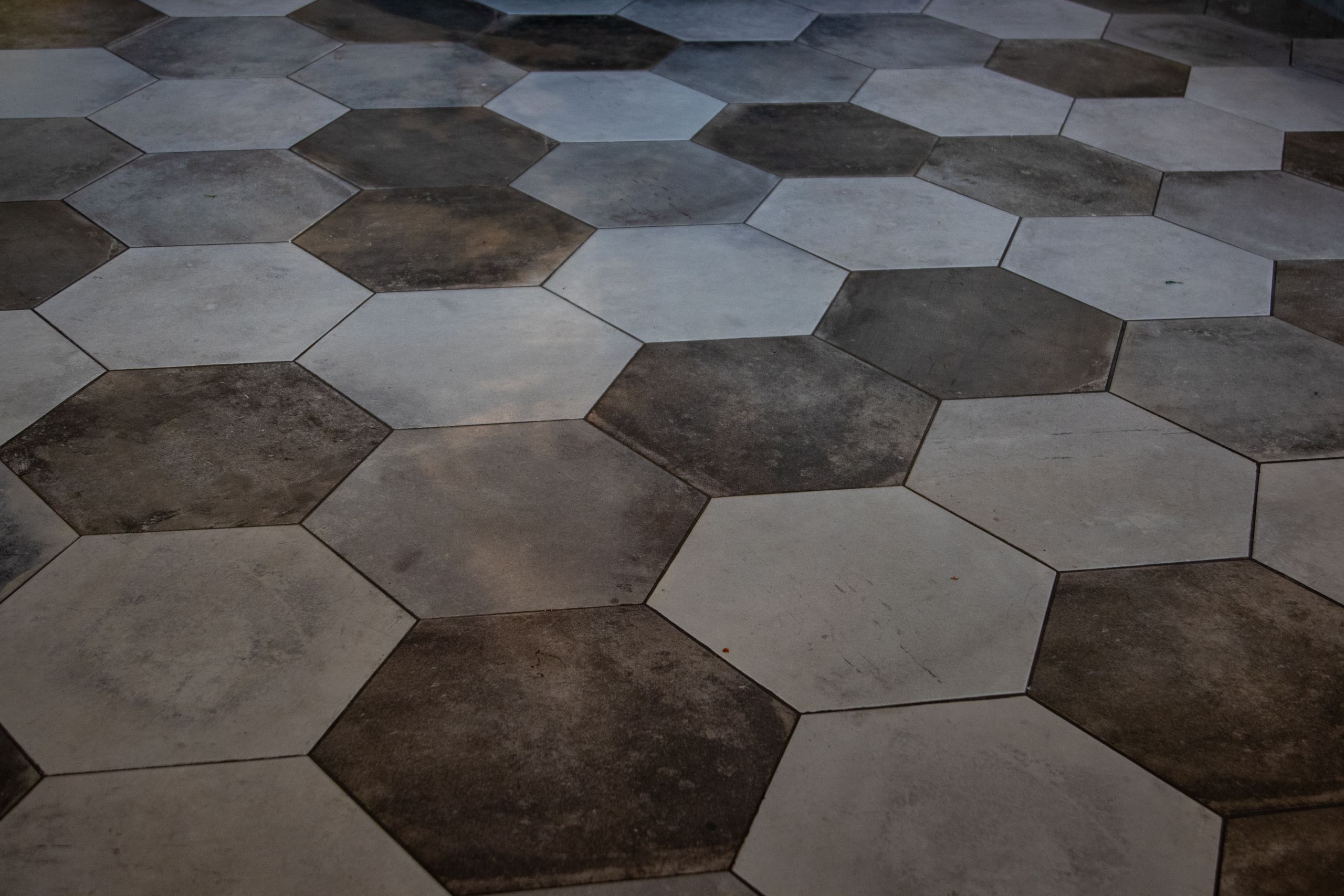
Tile is a set of individual pieces, usually ceramic or porcelain, set in adhesive over a prepared substrate and grouted at the joints. The tiles themselves are hard and water-resistant, but the floor as a system has seams: grout lines that collect dirt, absorb stains, and can crack or crumble when the substrate moves or moisture pushes from below.
Miami humidity and moisture: where the difference shows up
Miami humidity affects both floors, but the failure looks different. Under epoxy, trapped slab moisture causes bubbling, blistering, or delamination, which is why a serious epoxy quote starts with an on-site inspection and an ASTM F1869 calcium chloride moisture test, diamond grinding to ICRI CSP 3-5, and moisture mitigation or a vapor barrier when the test calls for it. Tile handles surface water well, but moisture from below can weaken adhesive, loosen tiles, and feed mold and staining in grout, especially in ground-floor rooms and coastal homes where damp air is constant.
Grout is the weak point in a humid home. It is porous, it stains, and it needs sealing and periodic re-sealing to stay clean. Epoxy has no grout at all, so cleaning is a sweep and a mop, with no lines to scrub. On the other hand, tile does not yellow in sunlight the way epoxy can, so for a sunlit indoor room, tile keeps its color without a special topcoat.
Pros and cons at a glance
- Epoxy pros: seamless, no grout to clean, strong stain and chemical resistance, uniform color or flake finish, hides an older slab.
- Epoxy cons: needs a dry-enough slab and careful preparation, can yellow in direct sun, and a damaged area is repaired as a coating, not a single piece.
- Tile pros: hard, water-resistant surface, huge range of colors and patterns, good color stability in sun, individual tiles can be replaced.
- Tile cons: grout lines stain and need sealing, tiles can crack or loosen on a moving or damp slab, and the surface is harder and colder underfoot.
Who should choose which
Choose epoxy for a garage, workshop, or storage room where oil, chemicals, and tire marks are daily life, and where a seamless surface that cleans in minutes matters more than a decorative pattern. It is also the better choice over a patched or stained slab that you would rather cover than work around.
Choose tile for a bathroom, kitchen, laundry room, or sunlit living space where water resistance and pattern matter, and where you are willing to maintain grout. Avoid tile over a slab with known moisture problems unless the cause is addressed first, because loose or hollow tiles are a common result.
Maintenance
Epoxy maintenance is simple: sweep or dust-mop, clean spills promptly, and wash with a pH-neutral cleaner, avoiding harsh abrasives on the topcoat. Tile needs the same routine plus grout care: regular scrubbing, sealing when the sealer wears, and prompt replacement of cracked tiles before water reaches the substrate.
What drives the cost
Cost is driven by square footage, slab or substrate condition, removal of any old coating or tile, moisture testing and mitigation where needed, and the system or tile and grout chosen. Tile labor rises with pattern complexity and cutting, while epoxy cost rises with preparation and the number of coats. Our cost guide explains each driver in detail.
Frequently asked questions
Can epoxy go over tile?
Sometimes, but not over glossy tile as it stands. The tile must be ground to a profile the epoxy can bond to, loose tiles and grout problems must be fixed first, and moisture underneath must be checked. In many cases, removing the tile gives a more reliable result.
Which is easier to clean?
Epoxy, because it has no grout lines. Tile cleans well on the tile face, but grout collects dirt and stains and needs scrubbing and sealing to stay presentable.
Does tile handle Miami moisture better?
Tile handles surface water well, but it is not immune to moisture from below. Vapor can loosen adhesive and stain grout, so a damp slab needs attention before either floor goes down.
Which is better for a garage?
For most garages, epoxy. It resists oil and tire marks, has no grout to clean, and gives a uniform finish over a working slab. Tile in a garage tends to crack under heavy loads and leaves grout lines that collect garage grime.
Still deciding? See the other comparisons on the Compare page, or return to the homepage for an overview of services.